
The Complete Guide to Yemeni Coffee
The Comprehensive Guide to Yemeni Coffee: History, Geography, and the Secret of Distinction
Introduction
For over five centuries, the name “Mocha” has been synonymous with the world’s finest coffee. Today, Yemeni coffee is not merely a historical legacy—it stands as one of the rarest and most complex specialty coffees on Earth. Each bean carries the story of rugged mountains, geographic isolation that preserved a genetic treasure, and cultivation techniques passed down through generations.
This guide is your journey to understanding this treasure: from its storied origins at the Port of Mocha to selecting your next lot of premium Yemeni green coffee.
Quick Summary: Why Yemeni Coffee Is Distinguished
- Altitude: Slows cherry maturation, increasing bean density and flavor concentration.
- Soil: Rich in volcanic minerals, imparting distinctive spice and earthy notes.
- Terrain: Rugged mountainous topography creates stable microclimates that protect genetic diversity.
- Genetic Diversity: Rare indigenous landrace varieties preserve flavor complexity that cannot be replicated anywhere else.
- Traditional Harvesting & Processing: Manual and meticulous, adding richness and clarity to the cup.
1️⃣ Excellence & Authenticity: The Secret of Distinction
Yemeni coffee’s uniqueness is no accident—it’s the convergence of four foundational pillars:
⏳ History
- Yemen served as the world’s original gateway for coffee exports through the Port of Mocha since the 15th century.
- This heritage gives Yemeni coffee unparalleled cultural and historical significance.
🧬 Genetic Diversity
- Yemen’s mountainous isolation has preserved rare indigenous landrace varieties untouched by commercial hybridization.
- This genetic diversity is the primary source of flavor complexity and regional variation.
⛰️ Geographic Signature
- Elevations reaching up to 2,400 meters.
- Volcanic soil rich in minerals.
- Mountainous terrain creating stable microclimates.
- This combination produces dense beans rich in the essential chemical compounds that define flavor.
☕ Flavor Profile
- Complex flavors reminiscent of dried fruits (apricot, fig), cocoa, and warm spices (clove, cardamom).
- Full body with balanced acidity.
- Each growing region adds its own distinctive signature.
2️⃣ Geography of Origin: Terroir of Exception
🗺️ Key Regions & Their Flavor Profiles
- Haraz / Bani Hashish: Bright acidity with vibrant fruit notes.
- Bani Matar / Sana’a: Full body with sweet flavors resembling dates or cocoa.
- Saada: Pronounced spice and floral characteristics.
⛅ Climate
- A short rainy season followed by prolonged dry periods, with significant diurnal temperature variation.
- This climate stresses the trees to produce lower yields but with concentrated, intensely flavored cherries.
💡 Visual Suggestion: Interactive map showing elevation, climate, and soil composition of each region, with icons indicating dominant flavor notes.
3️⃣ The Genetic Treasure: Unique Varietal Diversity
- Indigenous varieties such as “Dawairi” and “Udaini” each possess distinct morphology and flavor profiles.
- Preserving these landraces protects the genetic future of Yemeni coffee.
🛡️ Challenges & Opportunities
- Climate change and crop substitution threaten some varieties.
- Sourcing coffee from sustainable farms supports the preservation of this diversity for future generations.
💡 Visual Suggestion: Photo gallery or infographic of Yemeni coffee varieties with flavor profile summaries for each landrace.
4️⃣ The Quality Journey: From Cherry to Green Bean
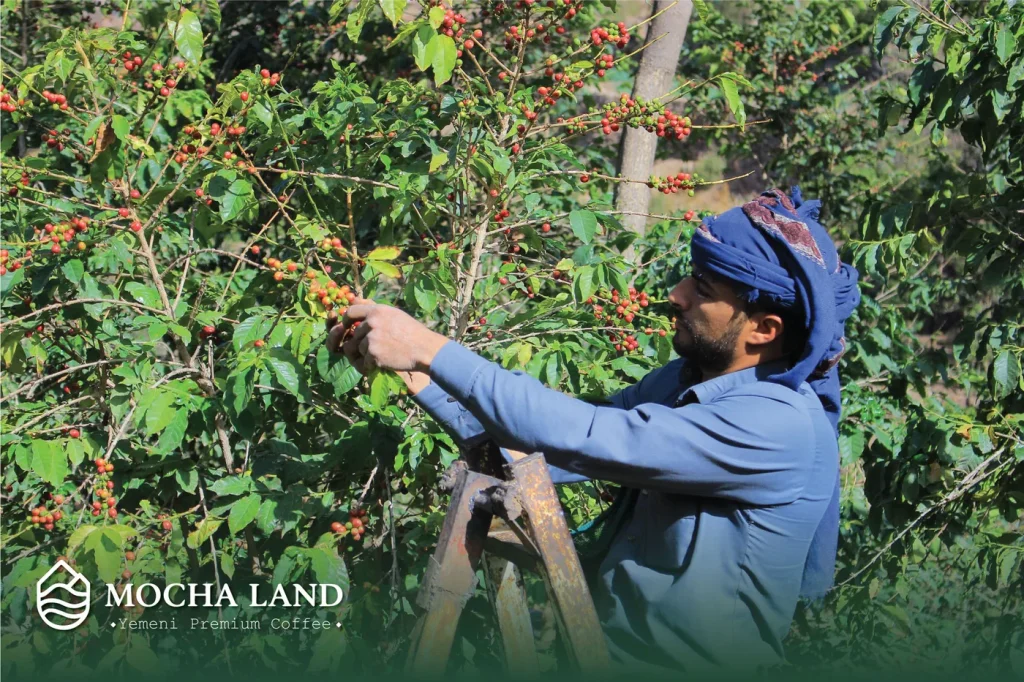
👨🌾 Harvesting & Processing
- Hand-picking of ripe cherries only.
- Predominantly natural (dry) processing under the sun, adding richness and syrupy body to the cup.
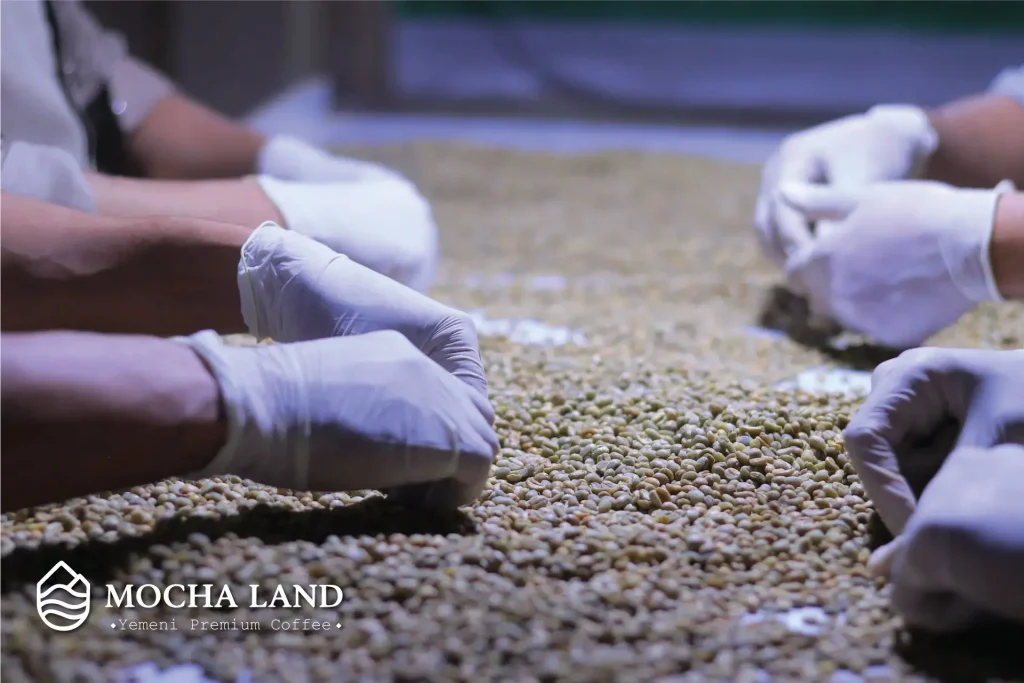
🔬 Sorting
- Multi-stage hand sorting to remove defective or immature beans.
- This meticulous process determines final bean quality before roasting.
5️⃣ Standards for Selecting Premium Yemeni Coffee
Rather than focusing on a single brand, here are the universal quality criteria:
- Full Traceability: From farm to bean, with transparent information about altitude, soil, and terrain impact.
- Multi-Level Quality Assessment: Physical inspection, sample roasting, and professional cupping evaluation.
- Sustainable Partnerships: Supporting farmers with fair pricing and improving post-harvest processing to ensure consistent quality.
Conclusion
Exceptional Yemeni coffee is the result of history, geography, genetic diversity, and traditional cultivation methods converging in harmony.
Understanding these factors provides roasters and importers with a scientific framework for appreciating Yemeni coffee’s distinction—and ensures informed selection of premium green coffee that will deliver an extraordinary cup experience.
Partner with a Trusted Yemeni Coffee Processing & Export Partner
Ready to work with a partner who understands every step of Yemeni coffee processing, from farm to export? Connect with Mocha Land to discuss your sourcing needs, review available lots, and request samples of our specialty Yemeni green coffee. Whether you are a roaster or importer, we provide transparent processes, detailed documentation, and reliable B2B support with every shipment.