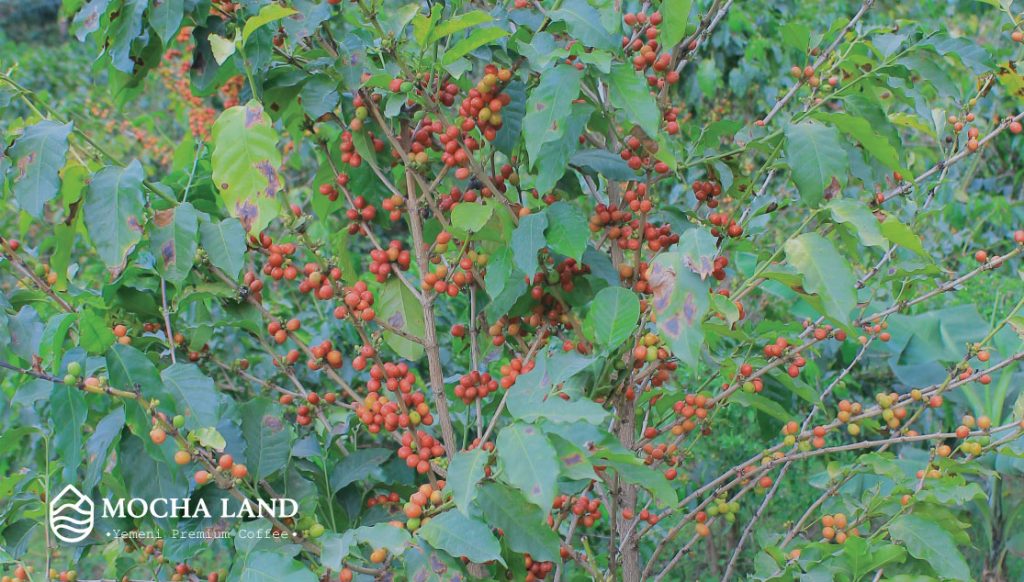
Long before “cascara” became familiar to the modern specialty coffee world, Yemen had its own deeply rooted tradition of preparing the dried coffee cherry fruit as a beverage known as Qishr.
When most people think about coffee, they think about the roasted bean. Yet every coffee bean begins its journey inside a fruit — the coffee cherry.
In Yemen, the story of that fruit does not end when the coffee seed is separated. For generations, dried parts of the coffee cherry have been used to prepare Qishr (قشر), a traditional beverage closely connected to Yemen’s coffee culture.
Today, Qishr offers a fascinating connection between Yemen’s coffee heritage and modern ideas of resource efficiency, waste reduction, agricultural value creation, and the fuller use of the coffee fruit.
What Is Qishr?
Qishr (قشر) is a traditional Yemeni beverage prepared from dried coffee cherry material, commonly the dried husk and pulp surrounding the coffee seed.
Rather than brewing roasted coffee beans, Qishr uses another part of the coffee fruit. The dried material is infused or simmered in hot water and, depending on local or family traditions, may be prepared with ingredients such as ginger and other spices.
The result is a beverage that is very different from conventional roasted coffee.
Qishr can have a lighter, more tea-like character, with flavors influenced by the coffee variety, growing region, processing, drying, storage, preparation method, and any spices added during brewing.
Internationally, dried coffee cherry pulp or husk used for beverages is commonly known as cascara.
In Yemen, however, the name Qishr carries a deeper cultural identity connected to the country’s long coffee tradition.
What Is Cascara?
Cascara is dried material from the coffee cherry that can be infused in hot water to produce a beverage.
The word cascara comes from the Spanish word cáscara, meaning husk, peel, or shell.
A coffee cherry contains several layers surrounding the seeds that eventually become green coffee beans. Depending on the coffee-processing method, material separated from the seed may include portions of the skin and pulp.
When suitable coffee cherry material is carefully processed, dried, stored, and prepared for food use, it can become a beverage ingredient commonly marketed internationally as coffee cascara.
This means cascara comes from the same fruit as coffee — but it is not the roasted coffee bean itself.
Qishr and Cascara: Are They the Same?
Qishr and cascara are closely related, but the words do not carry exactly the same meaning.
Cascara is now widely used as an international product-category term for dried coffee cherry material intended for infusion.
Qishr, on the other hand, is deeply associated with Yemen and the traditional beverage prepared from coffee cherry husks or pulp.
A useful way to understand the distinction is:
Cascara describes the product category. Qishr expresses the Yemeni tradition and cultural identity surrounding it.
For international audiences, the description:
Yemeni Qishr — Coffee Cascara
can therefore provide both clarity and cultural context.
The word cascara helps coffee professionals understand the product, while Qishr preserves its Yemeni identity.
A Long-Standing Yemeni Coffee Tradition
Yemen occupies a remarkable place in the history of coffee.
For centuries, coffee cultivation, processing, trade, preparation, and hospitality have become deeply connected with Yemeni communities and culture.
Within that wider coffee tradition, Qishr developed as another way of using the coffee fruit.
Scientific literature describing coffee by-products recognizes traditional coffee-cherry beverages consumed in Yemen under the name Qishr. European food-safety documentation also recognizes Yemen among the countries with a documented history of food use of dried coffee cherry pulp and its infusion.
This is important because Qishr should not be understood simply as a new beverage invented by the modern specialty coffee industry.
For Yemen, it represents a living connection between coffee agriculture, traditional knowledge, hospitality, and the use of the coffee fruit beyond the bean.
From Coffee Cherry to Coffee Bean — and Qishr
To understand Qishr, it helps to understand the coffee cherry itself.
Coffee grows as a fruit on the coffee tree. Inside each ripe cherry are usually two seeds.
Those seeds eventually become what the world knows as green coffee beans.
But the seed is only one part of the fruit.
The coffee cherry also contains outer fruit layers surrounding those seeds.
During coffee processing, the seeds and fruit material are separated. The exact result depends on the processing method used.
In dry or natural processing, for example, whole coffee cherries are dried before the dried fruit layers are removed from the seeds.
Those dried fruit materials can have uses beyond simply being discarded.
One of those uses is the preparation of Qishr or cascara.
More Than the Coffee Bean
The global coffee industry has traditionally placed most of its commercial attention on the coffee seed.
That makes sense: the roasted seed produces the beverage known globally as coffee.
But looking at the whole coffee cherry creates another perspective.
The fruit surrounding the coffee seed is also an agricultural resource.
When it is suitable for food use and properly handled, dried coffee cherry material may become another marketable product rather than remaining an underused processing output.
Qishr demonstrates an idea that feels remarkably modern:
creating more value from the same agricultural harvest.
For Yemen, however, this idea is not entirely new.
Traditional coffee culture had already found value in another part of the coffee fruit.
Qishr, Resource Efficiency, and Reducing Waste
Coffee processing can generate significant quantities of fruit material in addition to green coffee beans.
Managing those materials responsibly is an important part of sustainable coffee production.
Transforming suitable coffee cherry material into a food product can contribute to a more resource-efficient coffee value chain.
Instead of thinking only about:
Coffee cherry → coffee bean
we can think more broadly:
Coffee cherry → coffee bean + other potential value-added products
Qishr is one example.
This does not mean that every coffee husk should automatically become a beverage.
Food safety, cleanliness, drying, moisture control, storage, traceability, contamination prevention, and compliance with destination-market regulations are essential.
But where those conditions are properly managed, cascara or Qishr can demonstrate how agricultural materials may be used more effectively.
Can Qishr Create Additional Value for Coffee Producers?
Potentially, yes.
Coffee farmers and processors traditionally generate value primarily through the green coffee beans they produce.
If properly processed coffee cherry material can also be developed into a safe and marketable product, it may create an additional value stream from the same coffee harvest.
This could provide opportunities for:
- product diversification;
- improved use of agricultural resources;
- development of specialty beverages;
- differentiated products linked to origin;
- new market opportunities; and
- potentially greater value creation within coffee-producing communities.
However, creating a successful cascara value chain requires more than simply collecting coffee husks.
The product must be handled as a food product.
Quality systems, hygiene, traceability, controlled drying and storage, food-safety testing, packaging, regulatory compliance, and market development all matter.
For that reason, the opportunity around Qishr is not simply about selling a by-product.
It is about creating a properly managed value-added coffee product.
What Does Qishr Taste Like?
Qishr does not taste like a conventional cup of roasted coffee.
Because it comes from the fruit surrounding the coffee seed rather than the roasted seed itself, its sensory character can be quite different.
Depending on origin and preparation, a Qishr or cascara infusion may show:
- dried-fruit characteristics;
- gentle sweetness;
- fruit-like acidity;
- floral impressions;
- tea-like qualities; and
- spice notes when ginger, cinnamon, or other ingredients are used.
There is no single flavor that defines every Qishr.
Just as coffee flavor changes with variety, terroir, processing, drying, and roasting, cascara flavor can also differ significantly according to its raw material and preparation.
This creates interesting possibilities for specialty cascara, where origin, processing, traceability, and sensory quality can become part of the product story.
How Is Qishr Traditionally Prepared?
Preparation methods can vary between Yemeni regions, households, and personal preferences.
In a common style, dried coffee cherry husks are combined with water and heated or simmered to extract their flavor.
Ginger is strongly associated with many Yemeni Qishr preparations, while other spices or sweeteners may also be used.
Some versions are simple and allow the natural character of the dried coffee fruit to dominate.
Others are more aromatic and spiced.
This variation is part of Qishr’s cultural richness.
Rather than a single standardized recipe, it represents a beverage tradition that can take different forms.
A Simple Way to Brew Coffee Cascara
For someone discovering cascara for the first time, a simple infusion can help reveal the character of the coffee fruit.
Use food-grade cascara intended for brewing, rather than unverified coffee-processing waste.
Add the cascara to hot water, allow it to infuse, and then strain it before serving.
Brewing concentration, temperature, and extraction time can be adjusted according to taste and according to the instructions supplied with the specific product.
The European Union’s specification for authorized coffee cherry pulp notes a typical infusion preparation of up to 6 grams of dried coffee cherry pulp per 100 millilitres of hot water above 75°C, although individual products and recipes may use different brewing approaches.
Traditional Yemeni Qishr preparation may also include ginger and other spices.
Does Qishr Contain Caffeine?
Yes. Qishr and coffee cascara naturally contain caffeine.
Although the beverage is made from coffee fruit material rather than roasted coffee beans, caffeine is naturally present in the coffee plant and in coffee cherry material.
The amount of caffeine in a prepared beverage can vary according to the raw material, quantity used, extraction method, water ratio, temperature, and brewing time.
For that reason, Qishr should not automatically be described as caffeine-free.
European Union rules also include specific labeling requirements when beverages containing authorized coffee cherry pulp exceed certain caffeine levels.
Consumers who monitor their caffeine intake should therefore treat cascara as a caffeinated beverage whose actual caffeine concentration can vary.
Is Cascara Safe to Drink?
Food-grade cascara can be used as a beverage when it is properly produced and complies with relevant food-safety regulations.
However, there is an important distinction between:
coffee-processing residue
and
coffee cherry material intentionally prepared and controlled as a food product.
Coffee cherry material intended for human consumption requires appropriate handling.
Potential concerns can include microbiological contamination, mould, mycotoxins, pesticide residues, foreign material, and inappropriate moisture or storage conditions.
That is why proper processing and testing matter.
In January 2022, the European Commission authorized dried coffee cherry pulp from Coffea arabica and/or Coffea canephora, and its infusion, for placement on the European Union market as a traditional food from a third country under specified conditions.
The supporting documentation recognized a history of safe food use in Yemen, Ethiopia, and Bolivia.
This regulatory development helped establish a clearer framework for cascara products in the European market.
developing cascara for international markets requires the same professional approach to food safety, documentation, and traceability expected from other food products.
Traditional knowledge can create an opportunity, but modern market access requires professional quality systems.
Why Yemeni Qishr Matters Today
Qishr sits at an unusual intersection.
It is simultaneously:
a traditional beverage,
a coffee product,
a cultural story,
an example of fuller agricultural resource use,
and a potential value-added product for modern markets.
That combination makes Yemeni Qishr particularly relevant today.
Around the world, consumers and coffee professionals are increasingly interested in understanding where products come from, how they are produced, who produces them, and how more value can remain at origin.
Qishr gives Yemen an authentic story within that conversation.
Yemen does not need to invent a cultural connection between coffee cherry beverages and its heritage.
The tradition already exists.
The opportunity today is to connect that heritage with modern quality standards, traceability, food safety, specialty markets, and thoughtful product development.
From Heritage to Innovation
Preserving tradition does not mean refusing innovation.
In fact, some of the most interesting opportunities in specialty coffee emerge when traditional knowledge and modern technology work together.
For Yemeni Qishr, that could involve improving:
- selective harvesting;
- controlled coffee-cherry drying;
- hygienic handling;
- moisture and water-activity management;
- traceability;
- laboratory testing;
- sensory evaluation;
- packaging;
- brewing standards; and
- international market development.
These improvements can help transform Qishr from a locally familiar product into a professionally presented specialty product while preserving its Yemeni identity.
Qishr and the Future of Yemeni Coffee
Yemeni coffee is internationally recognized for its history and distinctive origins.
But heritage alone should not define its future.
The future can also include:
quality, innovation, transparency, traceability, sustainability, and greater value creation at origin.
Qishr fits naturally into that vision.
It demonstrates that the economic and cultural value of the coffee cherry does not necessarily end with the green bean.
It also creates a different way for international consumers to discover Yemen.
Someone may first encounter Yemen through a cup of specialty coffee.
Another person may discover it through Qishr.
Both experiences lead back to the same landscape, the same coffee fruit, and the communities that produce it.
Mocha Land and the Wider Value of the Coffee Cherry
At Mocha Land, we believe Yemeni coffee should be presented to the world through quality, transparency, origin, and a deeper understanding of the people and traditions behind it.
Our work with Yemeni coffee is not limited to viewing coffee as a commodity.
We are interested in the wider coffee value chain — from producers and growing regions to processing, quality, traceability, specialty markets, and value creation at origin.
Qishr represents an important part of that story.
It reminds us that coffee is not simply a bean.
It begins as a fruit.
And when we understand the whole fruit, we may also discover new ways to appreciate its heritage, flavor, resources, and value.
Frequently Asked Questions About Qishr and Cascara
What is Qishr?
Qishr is a traditional Yemeni beverage prepared from dried coffee cherry husks or pulp. It is commonly brewed or simmered in water and may be prepared with ginger or other spices.
What is coffee cascara?
Coffee cascara is dried material from the coffee cherry, generally the pulp or husk surrounding the coffee seed, that is prepared for use as an infusion or beverage ingredient.
Is Qishr the same as cascara?
They are closely related. Cascara is the internationally recognized product-category term, while Qishr refers specifically to the Yemeni beverage tradition and its cultural identity.
Is Qishr made from coffee beans?
No. Qishr is made from dried material from the coffee cherry surrounding the seeds rather than from roasted coffee beans.
Does Qishr taste like coffee?
Not usually. Qishr can have a lighter, fruitier, more tea-like character than roasted coffee, although flavor varies according to origin, processing, preparation, and spices.
Does Qishr contain caffeine?
Yes. Coffee cherry material naturally contains caffeine. The concentration in a prepared Qishr or cascara beverage varies according to the product and brewing method.
Is cascara a tea?
Cascara is sometimes called coffee cherry tea, but botanically it is not tea because it does not come from the Camellia sinensis tea plant. It is more accurately described as a coffee cherry infusion.
Is cascara a waste product?
It may originate from material separated during coffee processing, but food-grade cascara should not simply be considered waste. When intentionally processed, controlled, tested, and prepared for human consumption, it can become a separate value-added food product.
What is the best name for Yemeni cascara?
For international audiences, “Yemeni Qishr (Coffee Cascara)” is a useful description because it explains the international product category while preserving the traditional Yemeni name and identity.