Held within the framework of the World Food Forum 2026, the exhibition brought together FAO members, private-sector representatives, farmers, organizations, innovators and other actors from across global agrifood systems.
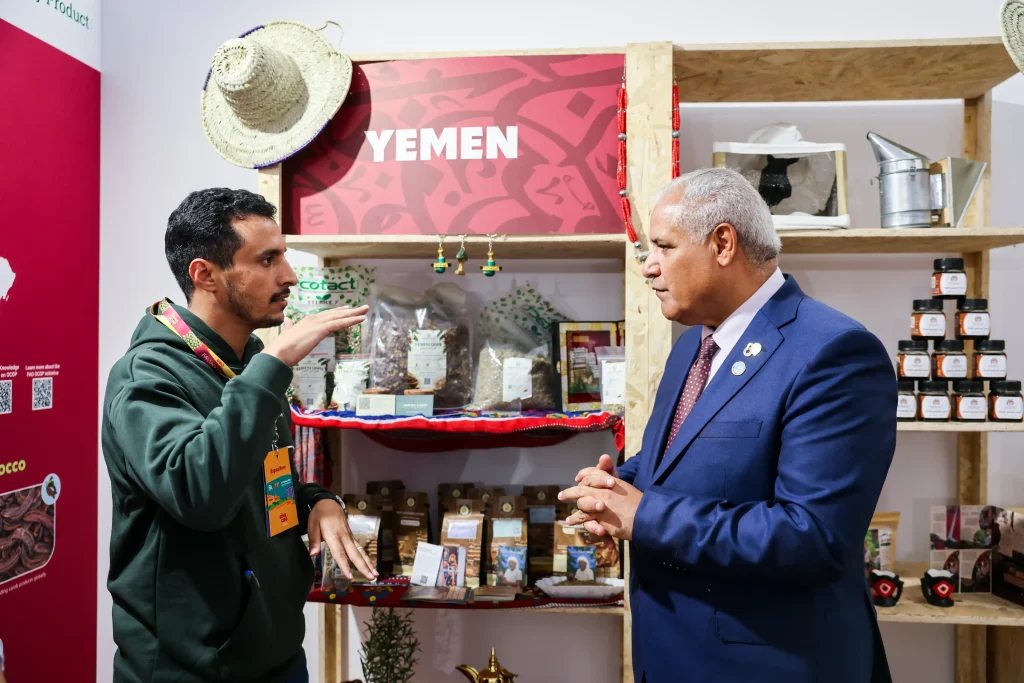
Mocha Land Coffee Export participated in the Second FAO Global Exhibition: From Seeds to Foods, held from 8–12 October 2026 at Circo Massimo in Rome, Italy, as part of the Regional Pavilion. The company was represented by its Founder & CEO, Abdulrazzaq Al-Khishani, who introduced visitors to Yemeni coffee, its quality, heritage and the communities behind it.
For Mocha Land, the exhibition provided an important international platform to present Yemeni coffee, its distinctive character, and the farming communities behind one of the world’s oldest and most historically significant coffee origins.
Bringing Yemeni Coffee to an International Audience
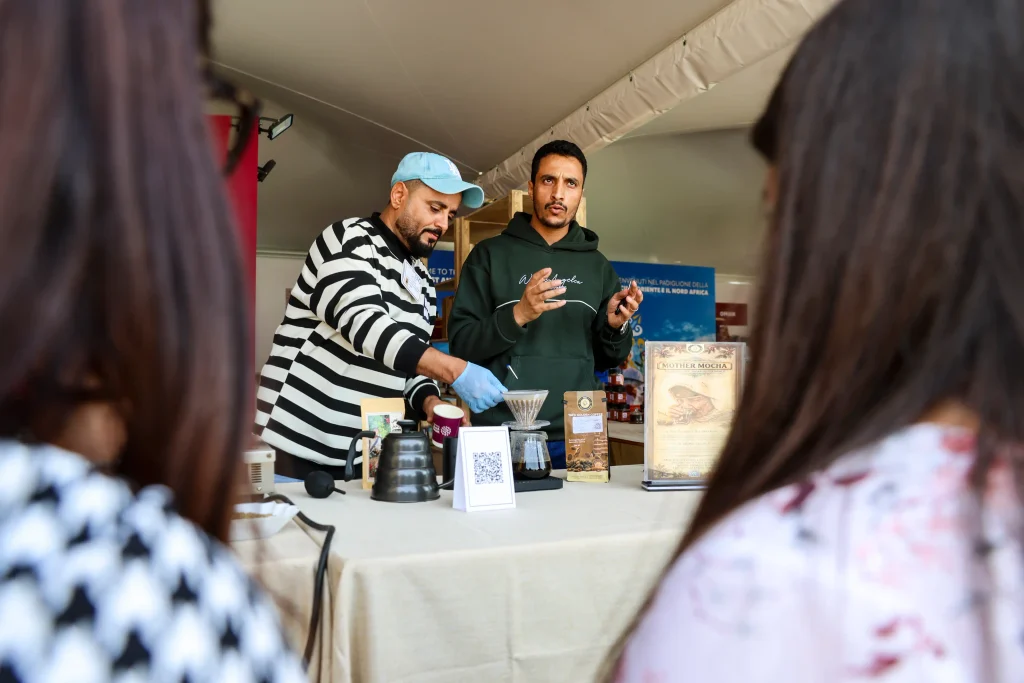
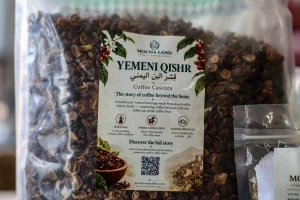
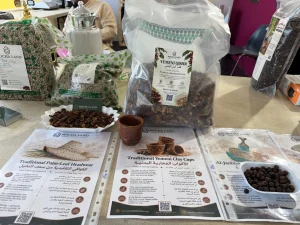
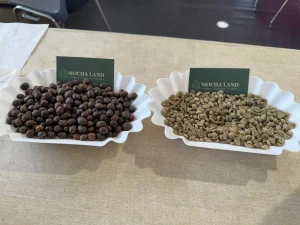
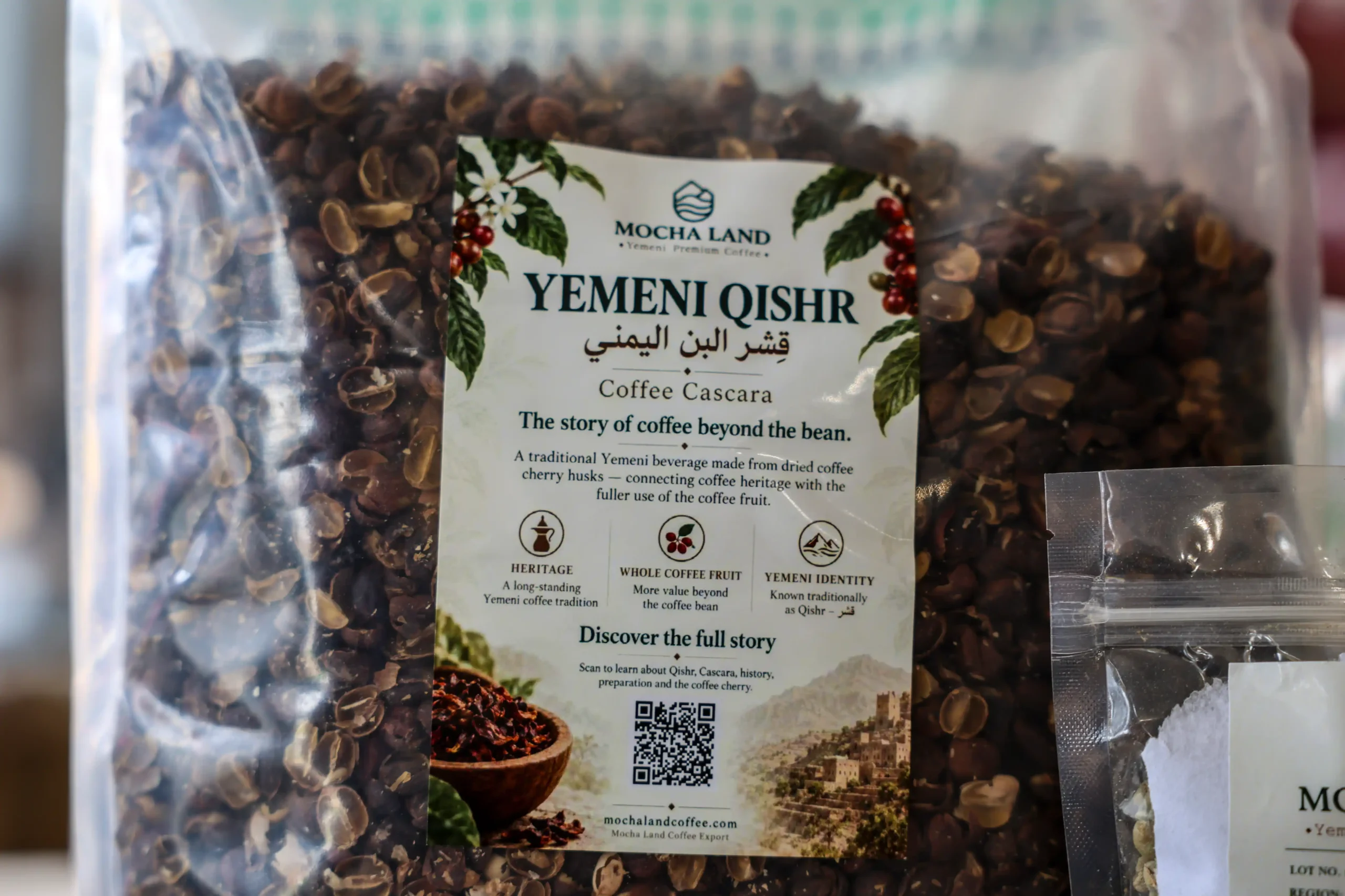
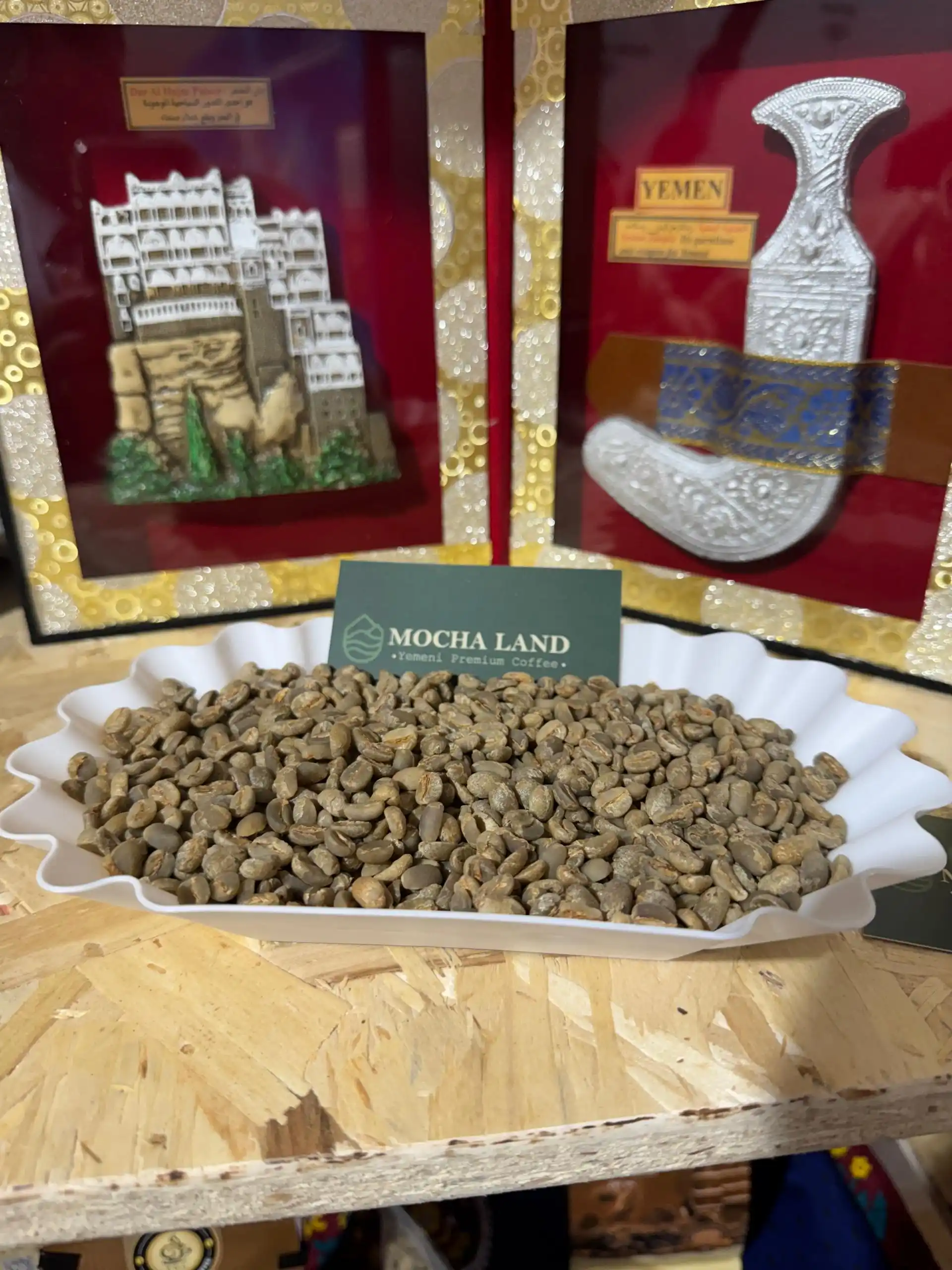
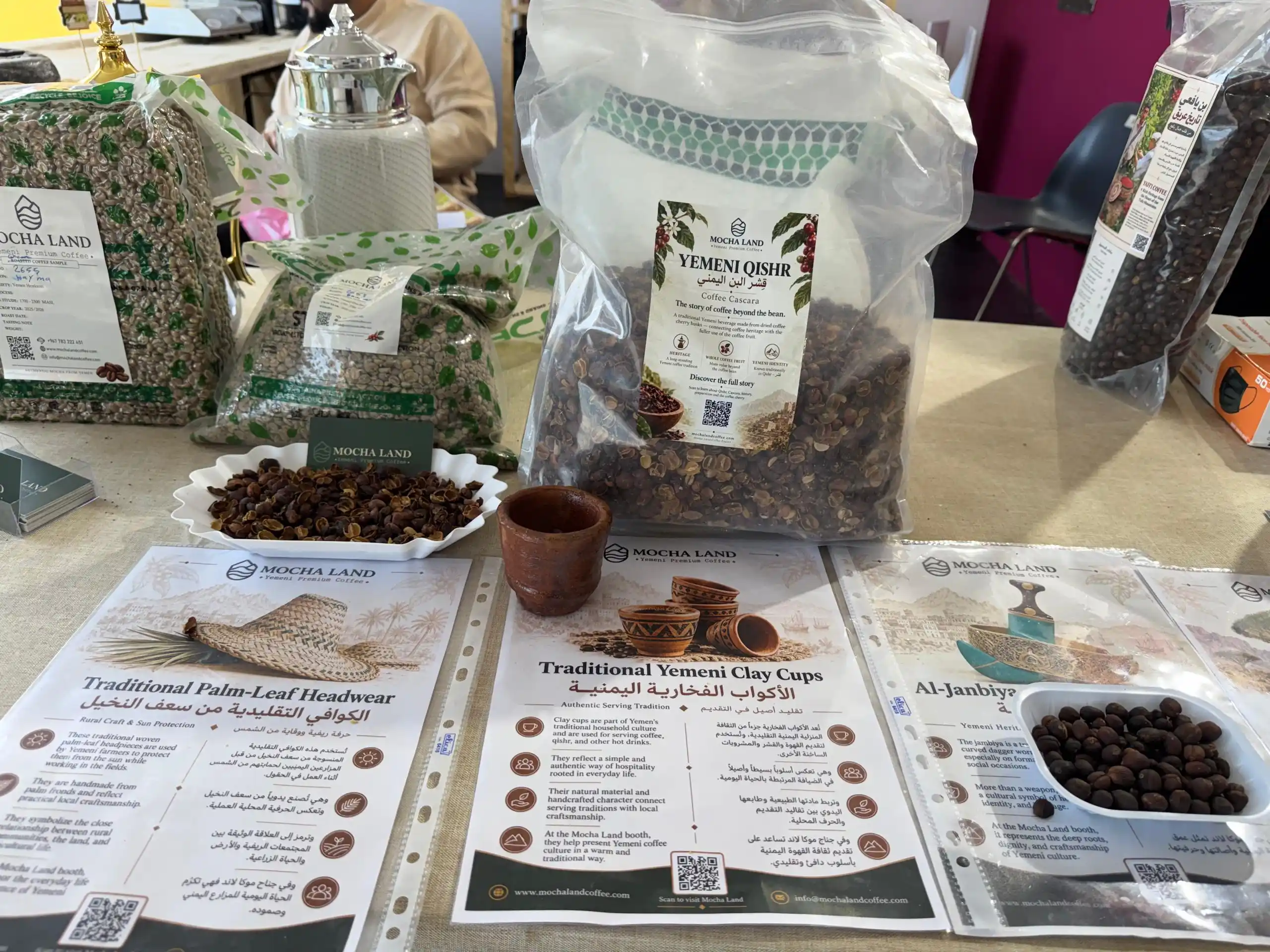
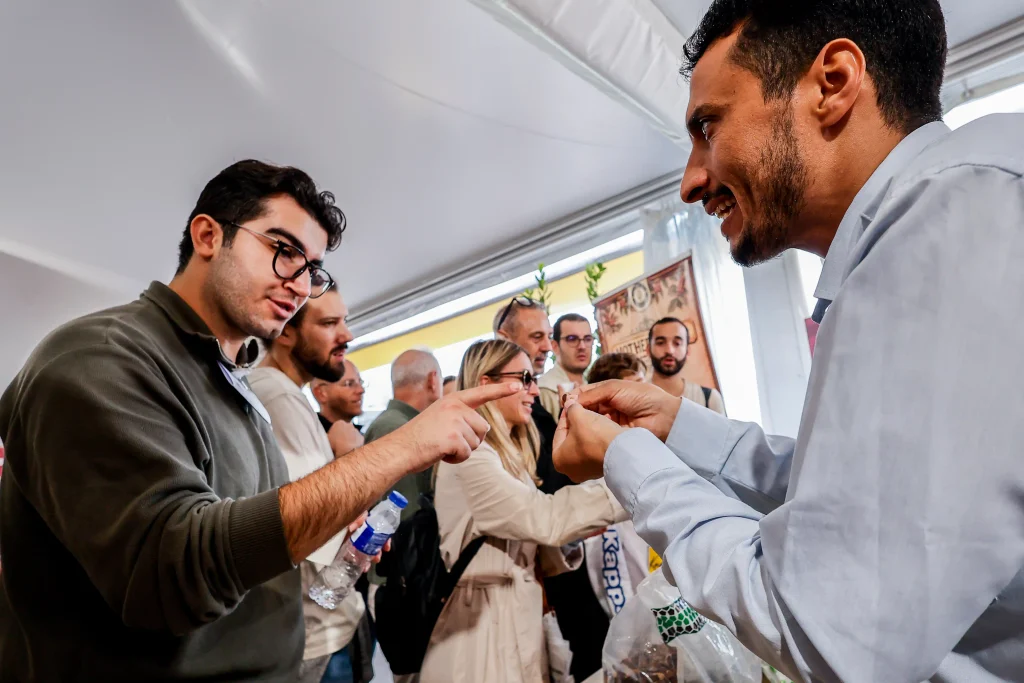
Throughout the exhibition, visitors had the opportunity to discover Yemeni coffee through direct conversations, live preparation and product displays at the pavilion.
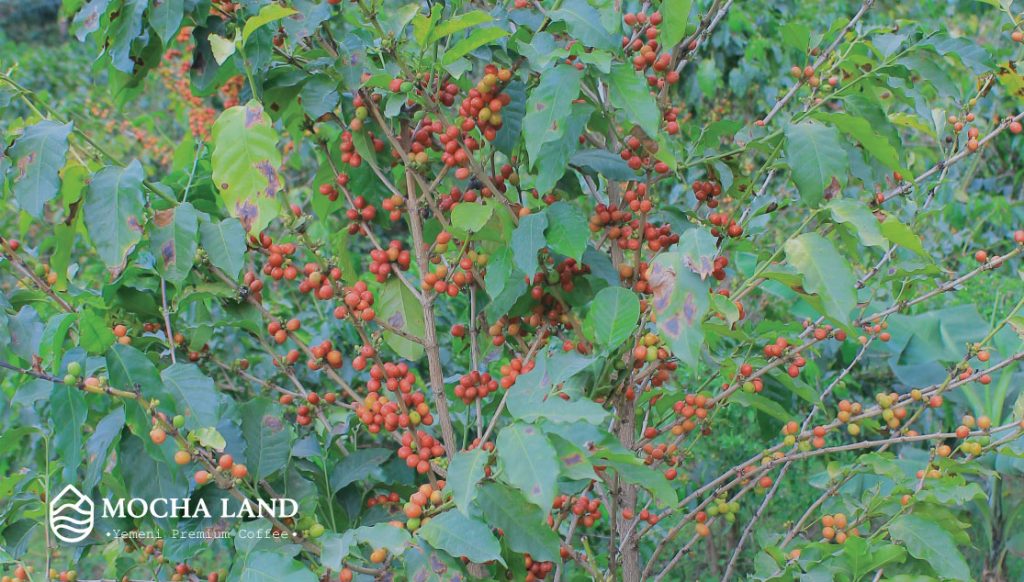
These interactions created space to explain what makes Yemeni coffee distinctive — from its mountainous growing environments and smallholder farming traditions to its processing methods and the diversity found across Yemen’s coffee-producing communities.
The conversations also went beyond flavor and cup quality. They explored the people behind the coffee, the knowledge passed down through generations, the challenges facing producers, and the opportunities that can emerge when high-quality Yemeni coffee gains stronger access to international markets.
Coffee, Heritage and Yemeni Identity
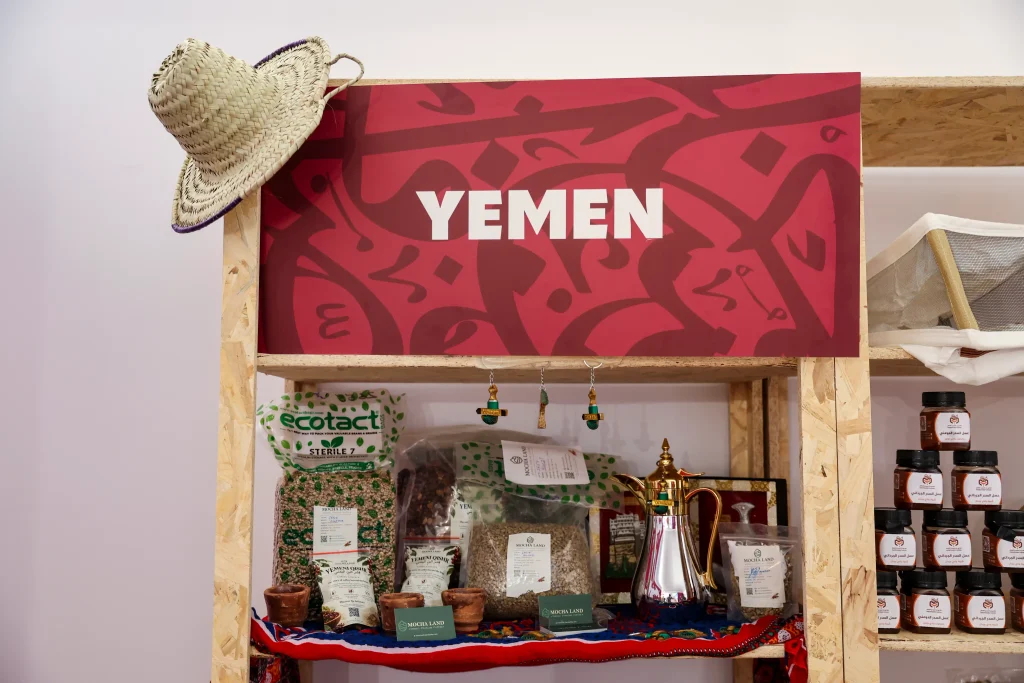
Coffee occupies a distinctive place in Yemen’s agricultural and cultural history.
For generations, coffee farming has been closely connected to rural communities, mountain terraces and family livelihoods across different parts of the country.
Mocha Land’s participation therefore focused not only on presenting coffee as a commercial product, but also on communicating the broader story surrounding it: origin, people, agriculture, culture and the long relationship between Yemen and the global history of coffee.
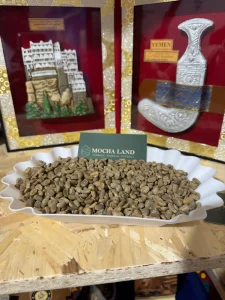
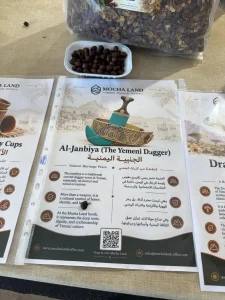
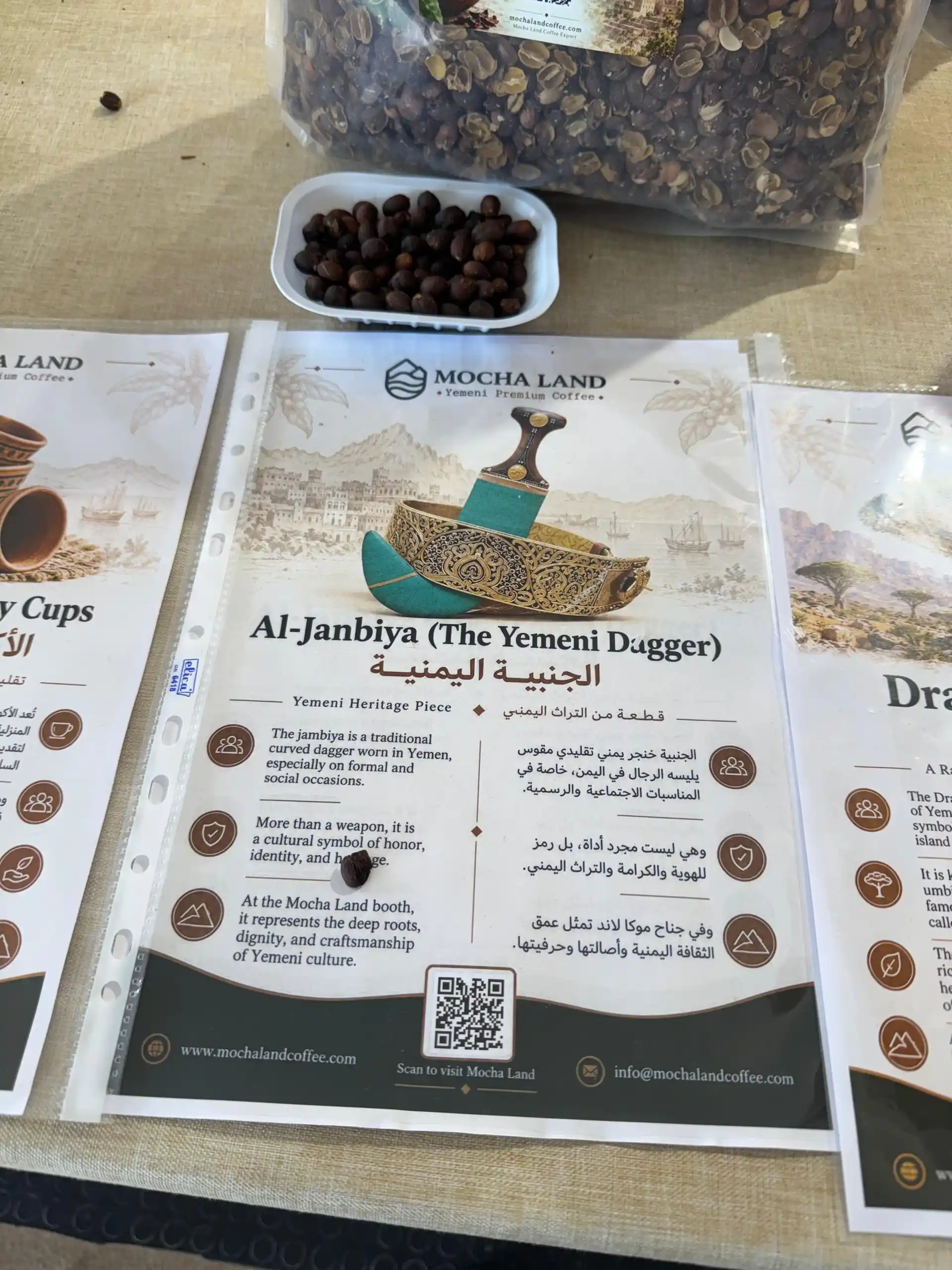
This approach was reflected throughout the exhibition through direct engagement with visitors and through the presentation of Yemeni coffee alongside elements of traditional Yemeni culture.
Conversations Around Quality, Origin and Market Access
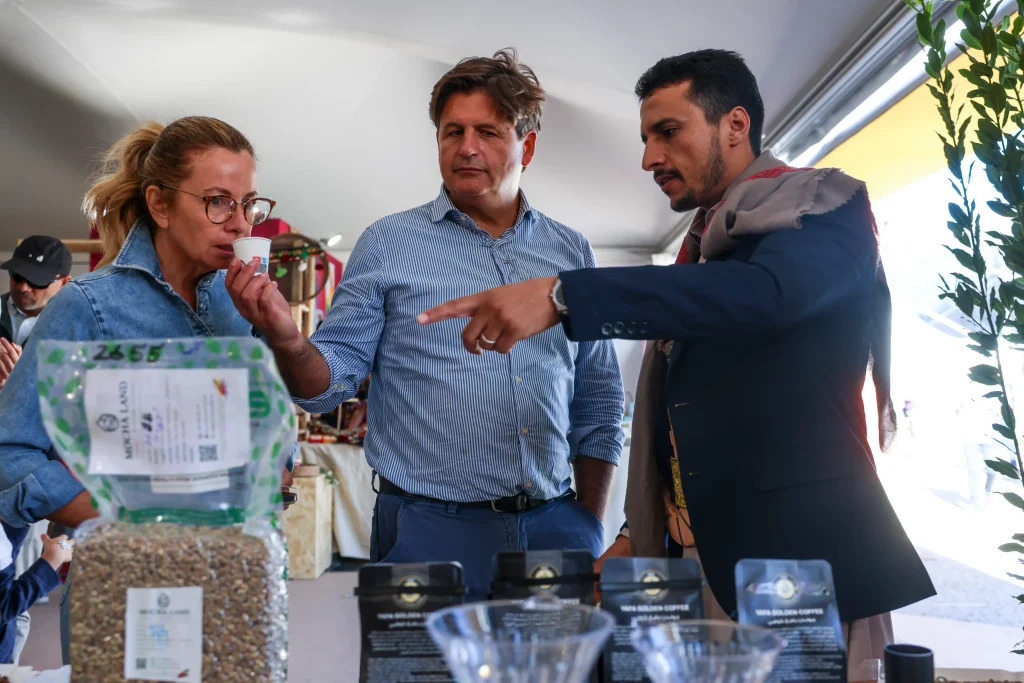
One of the most valuable aspects of the exhibition was the opportunity to speak directly with visitors from different professional and cultural backgrounds.
Discussions frequently focused on coffee quality, processing, traceability, Yemen’s growing regions and the potential for Yemeni specialty coffee to build stronger relationships with international buyers and consumers.
For Mocha Land, these conversations are closely connected to the company’s broader work.
Coming from an agricultural environment, the founders of Mocha Land established the company with the goal of contributing to the development of Yemeni coffee quality and creating stronger connections between producers in Yemen and international markets.
The company works to present coffee with greater attention to origin, quality, traceability and the stories of the farming communities behind it.
Engaging a New Generation With the Story of Coffee
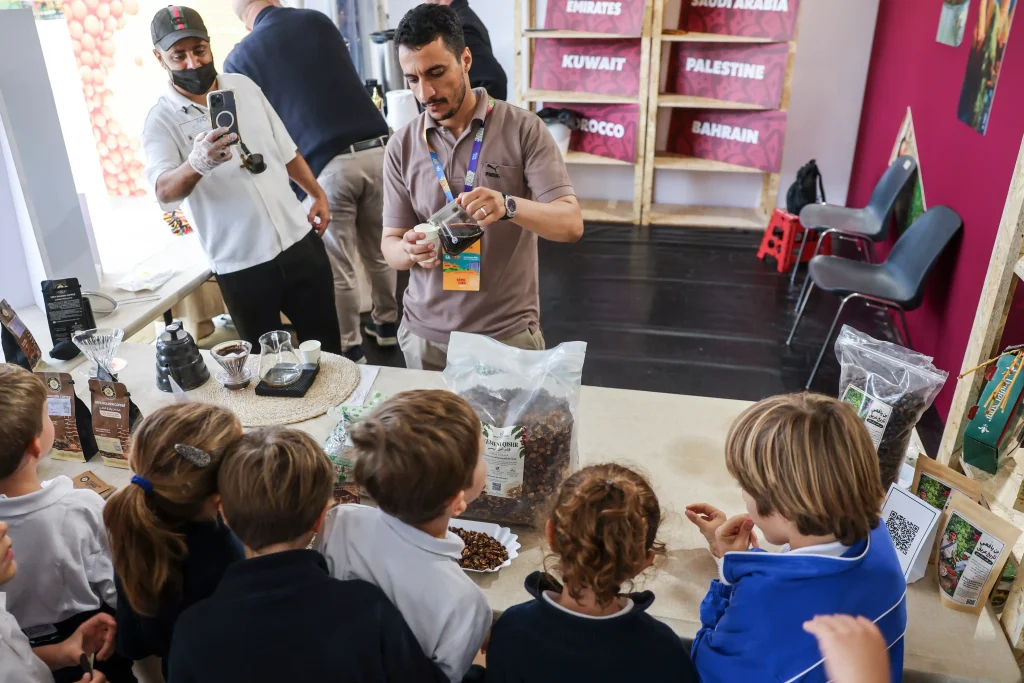
The exhibition was also an opportunity to engage younger visitors.
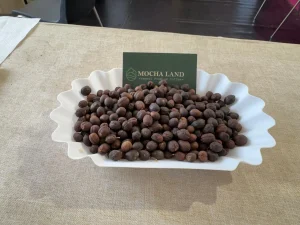
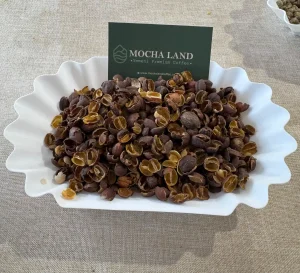
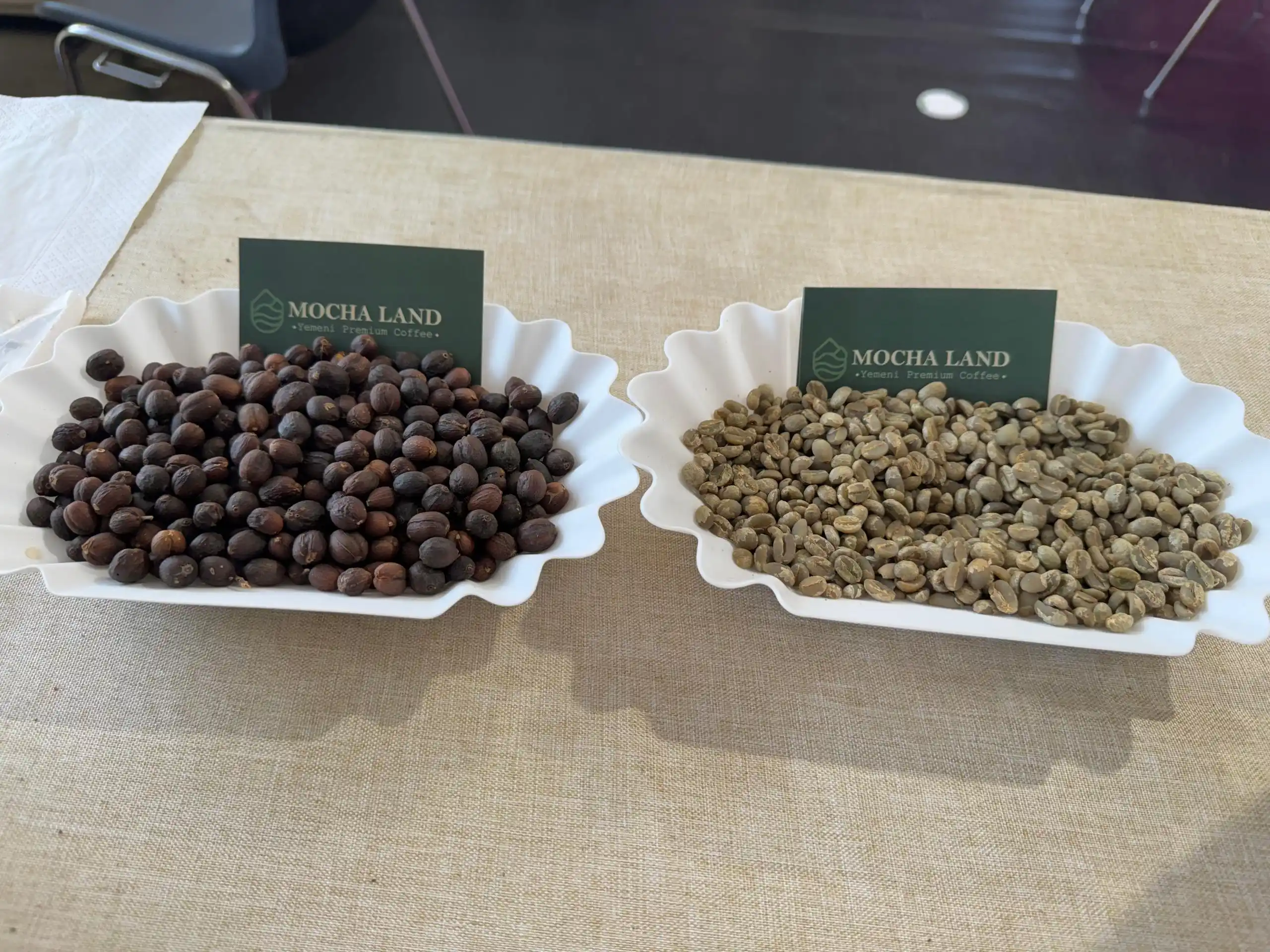
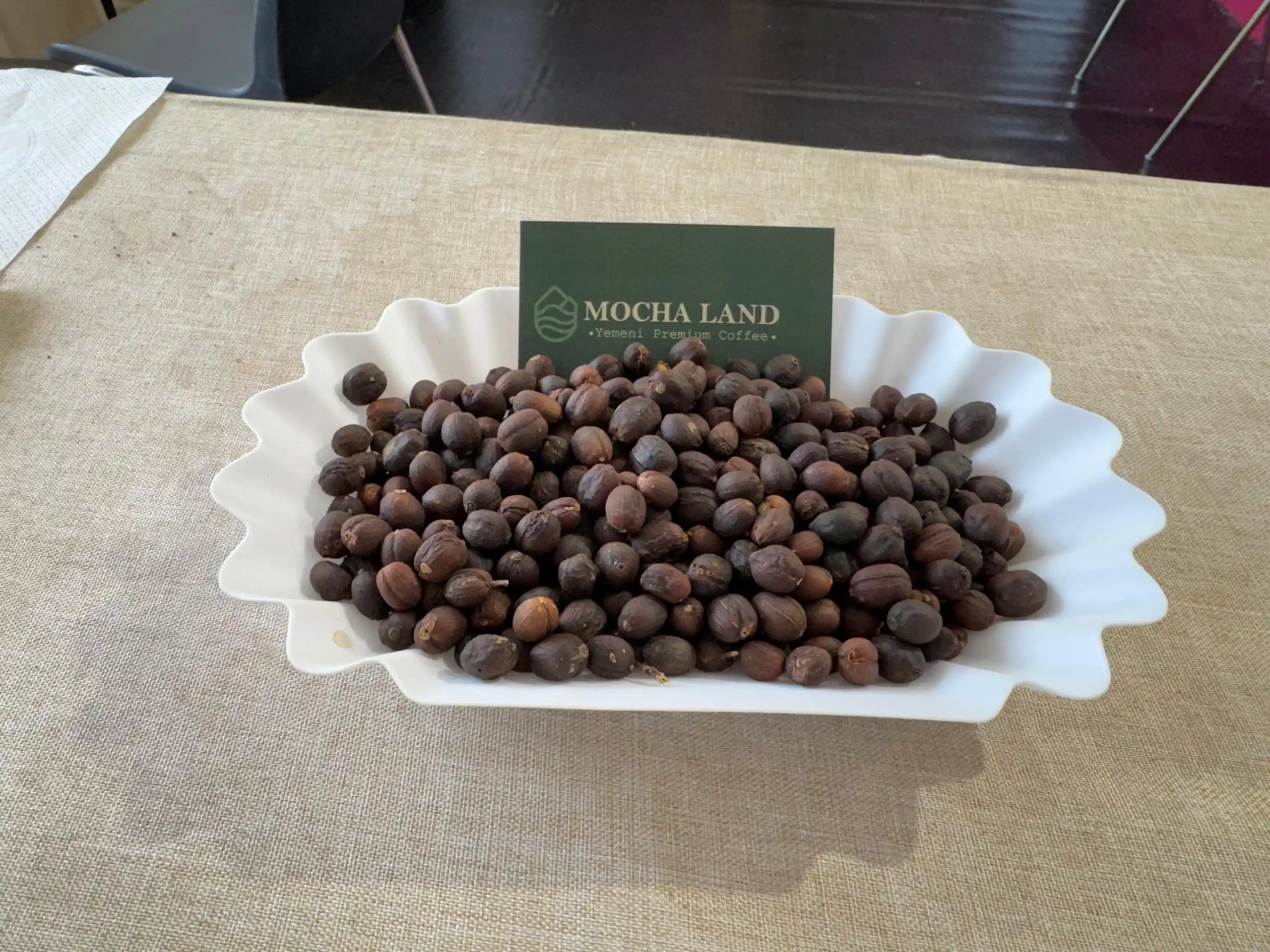
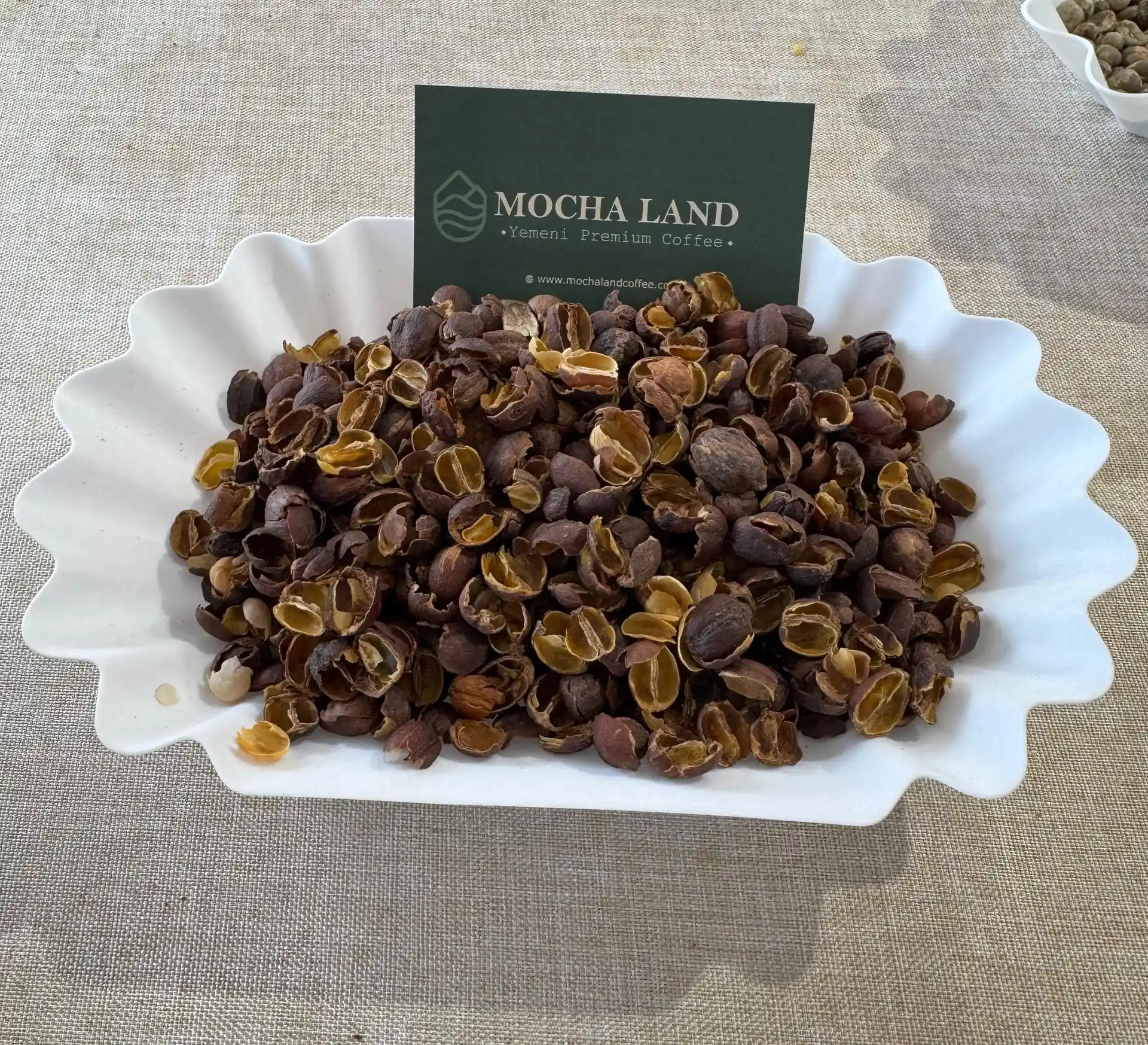
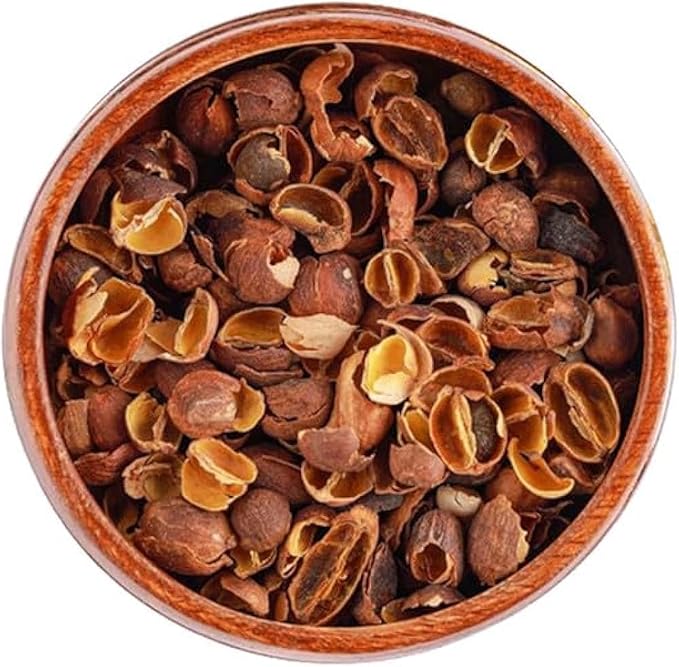
Children and families stopped at the pavilion to see coffee beans, dried coffee cherries and traditional products, ask questions and observe the preparation of coffee.
These interactions reflected one of the broader strengths of the FAO Global Exhibition: making agriculture and food systems accessible to different audiences through practical experiences, demonstrations and conversations.
Mocha Land on the FAO Talks Stage
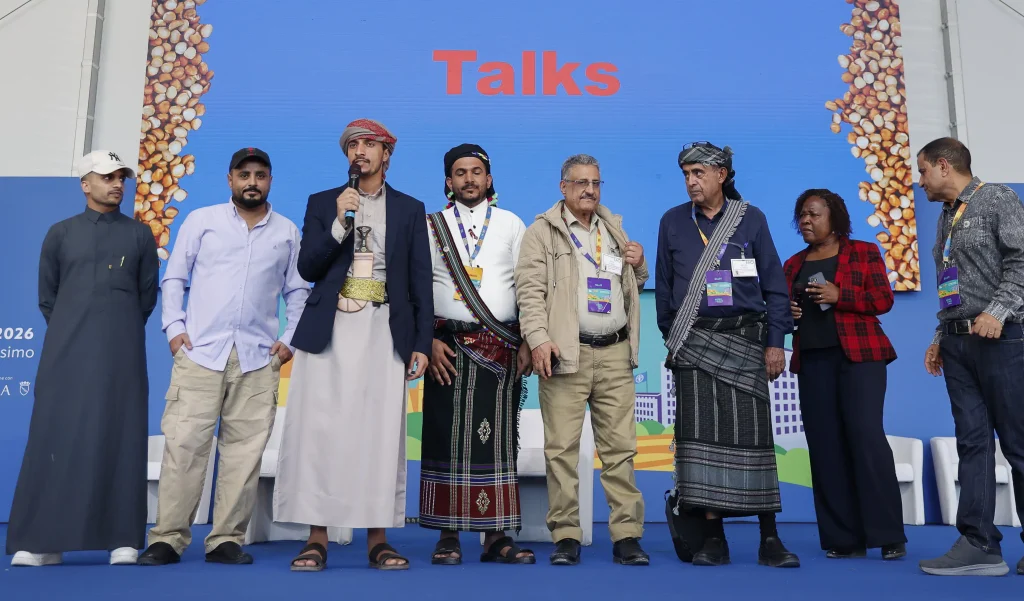
Mocha Land also took part in the exhibition’s public talks, providing another opportunity to speak about Yemen, agriculture and coffee in front of an international audience.
The stage participation complemented the conversations taking place at the pavilion and helped bring greater visibility to Yemeni coffee within the wider exhibition program.
For Mocha Land, participating in such discussions is part of a broader effort to ensure that Yemeni coffee is represented not only through the cup, but also through the voices of the people working within its value chain.
Meeting FAO Leadership and International Participants
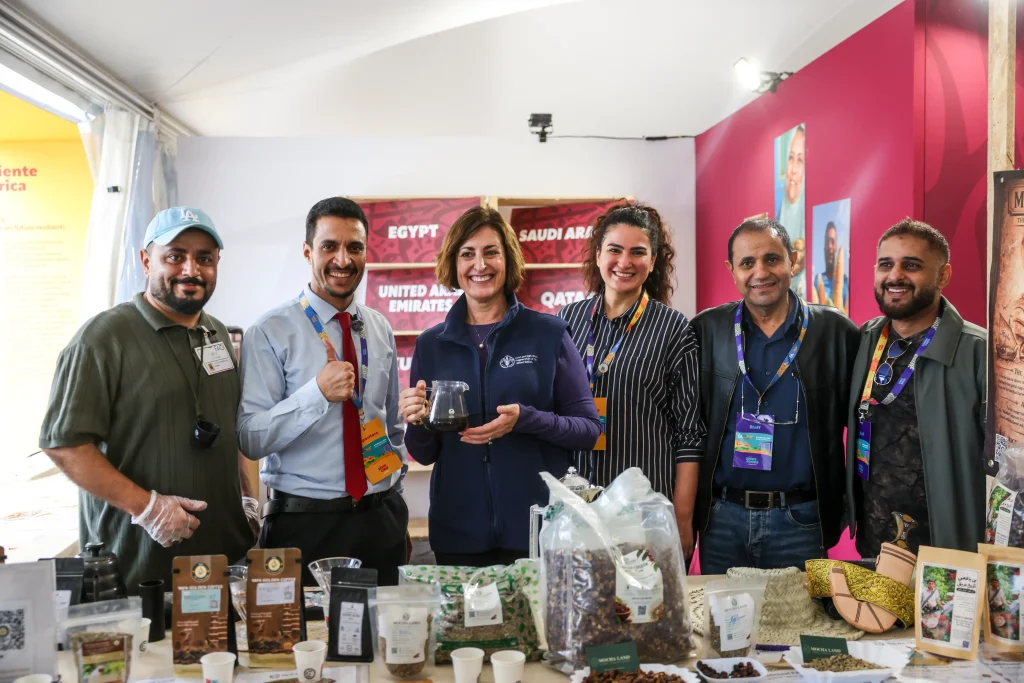
The exhibition also created opportunities for exchanges with FAO leadership, organizers, participants and professionals working across agriculture and food systems.
These encounters provided space to discuss Yemeni agriculture and coffee, while also introducing Mocha Land’s work and its interest in building relationships that can contribute to quality development and wider market access.
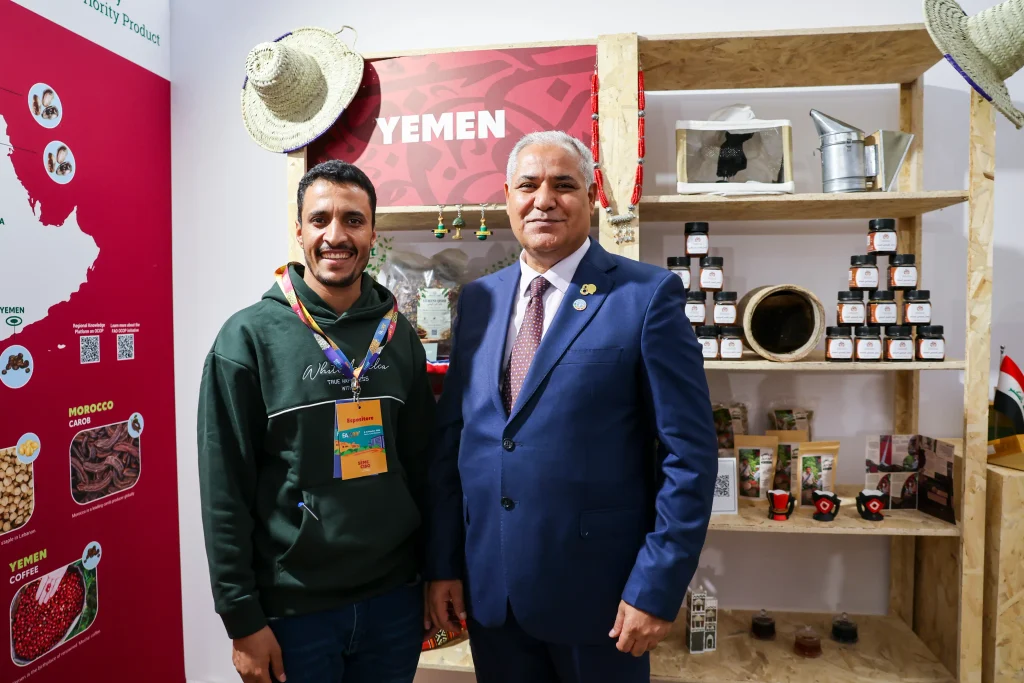
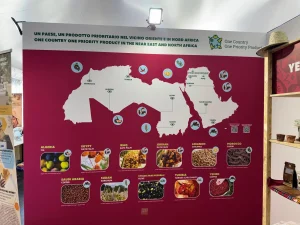
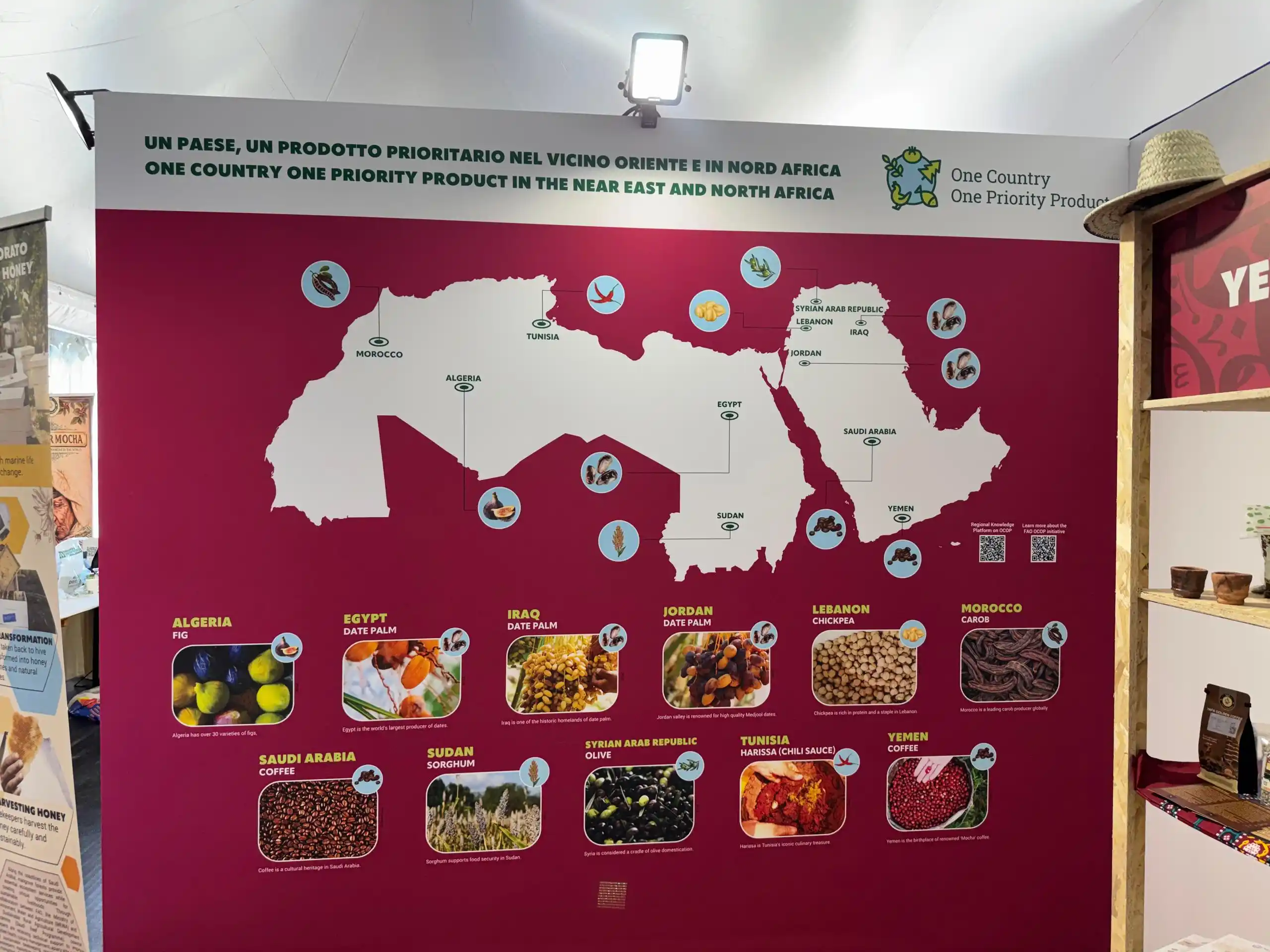
As part of the Regional Pavilion, Mocha Land’s participation also provided opportunities to engage with stakeholders working across the Near East and North Africa region and discuss the importance of agricultural value chains, origin products and stronger connections between producers and global markets.
From Yemen to Rome — and Beyond
For Mocha Land, participation in Rome represents another step in a longer journey.
The company’s ambition is to help strengthen the position of Yemeni coffee in international specialty markets by focusing on quality, transparency, producer relationships and professional access to buyers.
Yemen’s coffee sector carries enormous historical significance, but its future will depend on more than history alone.
It will depend on continued investment in quality, stronger connections with farmers, better market access, improved traceability and the ability to communicate the value of Yemeni coffee clearly to the world.
Mocha Land aims to contribute to that process by connecting origin with opportunity.
Looking Ahead
The FAO Global Exhibition 2026 provided Mocha Land with an important opportunity to represent Yemeni coffee internationally, meet new people, exchange ideas and introduce visitors to a coffee origin with a remarkable past and significant future potential.
The experience in Rome also reinforced a central idea behind Mocha Land’s work: the future of Yemeni coffee lies in combining its extraordinary heritage with quality development, stronger producer connections and meaningful access to global markets.
As Mocha Land continues expanding its international relationships, the company looks forward to creating new partnerships with coffee importers, roasters, organizations and professionals who are interested in discovering and supporting high-quality Yemeni coffee.
More Moments from the FAO Global Exhibition 2026